Havana. – (Prensa Latina) Ever since the first headline of September 14, 62 years ago, announced the trip of the historical leader of the Cuban Revolution, Fidel Castro, to New York, attempts began to hinder the visit.
The then Prime Minister Fidel would go to the headquarters of the United Nations Organization (UN) and would speak for the first time before that audience on self-determination, sovereignty and peace, but the Government of the United States saw in it a threat and immediately began to adopt measures.
In a short time they ordered the restriction of the revolutionary guerrilla’s movements while he was in New York, limiting him to the island of Manhattan, supposedly for security reasons.
Faced with the action of the US State Department, the Caribbean nation did not sit idly by and responded on September 16 with the confinement of the US ambassador in Havana, Phillip Bonsal, to a reduced area of the capital’s Vedado.
The following day, the Cubans also reacted to the hostility of the recently approved United States Sugar Law, classified as an act of cowardly and criminal economic aggression, by attacking the sugar sector, the island’s main source of resources.
On September 17, Fidel Castro and President Osvaldo Dorticós signed a Resolution that nationalized a group of North American banks that operated in Cuba, a position that made loud and clear the firmness of the Cubans’ decision not to give in to pressure.
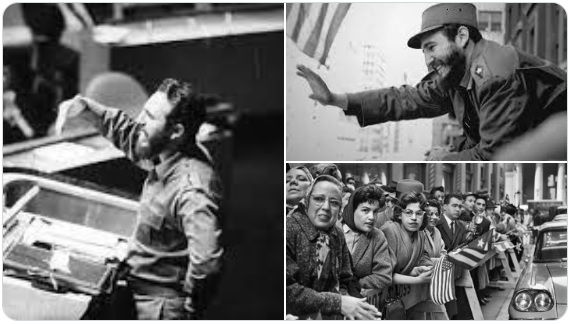
On the morning of Sunday the 18th, when the prime minister undertook a trip to New York at the head of the delegation that would participate in the XV session of the UN General Assembly, it was clear that it would not be a visit like that of any other government representative .
And so it was: if, on the one hand, the United States showed signs of its inability to be the seat of the UN, for not maintaining due respect for the impartiality of that body; the American people and people from other parts of the world gave the revolutionary leader the warmest expressions of affection and appreciation.
The crowd waited for more than five hours for the arrival of the plane in which Fidel was traveling, and despite the persistent drizzle no one moved from his position, historian Eugenio Suárez recounted years later.
A strong security device with approximately 500 police officers and an undetermined number of secret agents arrived at the airport in an attempt to separate the Cuban from the crowd that cheered him and followed him in a caravan of more than 100 cars, 25 buses and several trucks, up to the city.
It was those humble people who waited for him at the Shelburne Hotel and also welcomed him at the Theresa Hotel, in Harlem, when the Cuban delegation was expelled from their accommodation on September 19.
Neither the exclusion of a lunch offered by President Eisenhower to the Latin American delegations, nor the shooting of revolutionary supporters prevented the truth about Cuba from being heard on September 26, 1960.
“We are and always will be with all that is fair: against colonialism, against exploitation, against monopolies, against militarism, against the arms race, against war games. Against that we will always be. That will be our position”, Fidel affirmed then.




 "An Island on a Continent"