
Havana, Jun 26 (Prensa Latina) While Cuba has more than 90 percent of its population vaccinated against Covid-19, almost a billion people in low-income countries remain deprived of protection against SARS-CoV-2.
According to recent statements by the director general of the World Health Organization (WHO), Tedros Adhanom, only 57 nations in the world managed to immunize 70 percent of their population, most of them high-income.
“In some countries we see insufficient will to implement immunization. This was affected by the initial lack of political commitment for equitable access to vaccines”, he referred.
Likewise, he called on the territories that reached 70 percent to provide support to those furthest behind, and urged to remain vigilant and to be prepared to reintroduce and adjust health and social measures as necessary.
“More than two years after the most serious health crisis in a century, the WHO has been informed of more than six million deaths from Covid-19, but our new estimates of excess mortality are higher: almost 15 million”, He said.
For its part, the Pan American Health Organization (PAHO) asked to immunize risk groups still unprotected in the countries of the area.
The agency recognized that too many people remain vulnerable to SARS-CoV-2, only 14 of the 51 nations and territories of the Americas have so far reached the goal of inoculating 70 percent of their citizens against the virus.
In some states, vaccination coverage is especially low among individuals at risk of serious illness, such as older adults, pregnant women and people with pre-existing conditions, the entity said.
“Each country is only as protected as the most vulnerable of its population. It is time to take note of these figures and act,” PAHO Director Carissa Etienne recently warned.
“We must take what we have learned from past emergencies to shape a future in which our health systems and leadership are better prepared to meet the next challenge. The better prepared our health systems are, the fewer lives we will lose and the stronger and more resilient our societies will be”, she remarked.
In contrast, in Cuba nine million 972 thousand 106 people have the complete vaccination schedule and seven million 379 thousand 262, more than 66 percent of the citizenry, have a booster dose.
The country is currently undergoing, in addition, the second reinforcement for those over 50 years of age that involves, according to estimates from the Ministry of Public Health, more than four million individuals.
In addition to this segment, the health authorities revealed that risk groups will be updated with immunization.
The child population over two years of age also has the three doses of the island’s vaccination schedule and, within this group, adolescents between 12 and 18 years of age have their first booster.
Not satisfied with that, the island is carrying out the essential clinical trials to immunize infants up to two years of age.
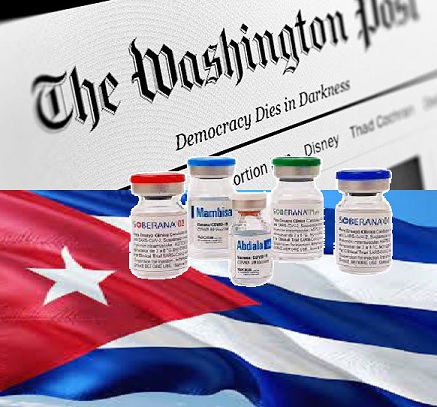
When at the end of last March the leader of the WHO highlighted the need to stimulate the local production of vaccines, fundamentally in low- and middle-income nations, Cuba already had three of its own (Abdala, Soberana 02 and Soberana Plus) and another two still in studios (Mambisa and Soberana 01).
At that time, the director expressed that in the fight against the virus, equity cannot be left to the mercy of market forces, the good will of donors or changing geopolitical currents.
In that fight to which the official alluded, where a lot of solidarity is needed, the Greater Antilles is also an example after the delivery of its products to other states.
The support, through donations of the immunogens, even reached various distant countries.
Despite being a low-income territory, the reality regarding access to vaccines for Cuba is different.
While almost a billion people wait for a dose that will protect them against Covid-19, the island made history with an immunization campaign that, similar to the challenge implemented in the nation, is distinguished by being massive and free.




 "An Island on a Continent"