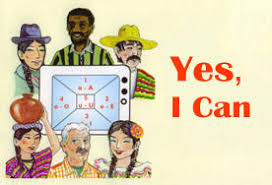
Havana, February 4, 2021. The teaching method “I, yes I can”, created in Cuba, has so far made 10 million 611 thousand 282 people from 30 countries literate, reported Eva Escalona, director of Science and Technology of the Ministry of Education (MINED).
Escalona pointed out that the program benefits indigenous communities in Australia and Mozambique, and, in the case of Mexico and Haiti, it is under arrest due to the COVID-19 pandemic.
Today we are working to apply the «I, yes I can» on mobile devices and on social networks, in a bid for digital literacy, she specified.
In addition, the MINED collaborates in 13 countries, with 290 professionalsin advising the ministries of education, and teaching at different educational levels.
The program was created by specialists from the Latin American and Caribbean Pedagogical Institute, a dependency of the Ministry, based on an idea of the historical leader of the Cuban Revolution, Fidel Castro, to develop a method of teaching letters from numbers.
The literacy booklet officially emerged on March 28, 2001, with the guidance of the Cuban Doctor in Pedagogical Sciences, LeonelaRelys Díaz, and was designed to be adapted to different social realities and languages.
The method uses numbers to stimulate the literacy learning process, combined with audiovisual resources, and is led by a facilitator, who transmits the knowledge.
«Yes, I can» accumulates 20 adaptations, it has reached countries in Latin America and the Caribbean, Africa, Oceania and Europe, and there are also versions for blind, deaf, and mildly intellectually impaired people.
According to several sources, the application of the Cuban system allows literacy in seven weeks and would eradicate the scourge with only a third of the fund of the United Nations Educational, Scientific and Cultural Organization (UNESCO) for these purposes.
Worldwide, 750 million young people and adults still cannot read or write, and 250 million children lack basic numeracy and literacy skills, UNESCO reports on its website.






 "An Island on a Continent"